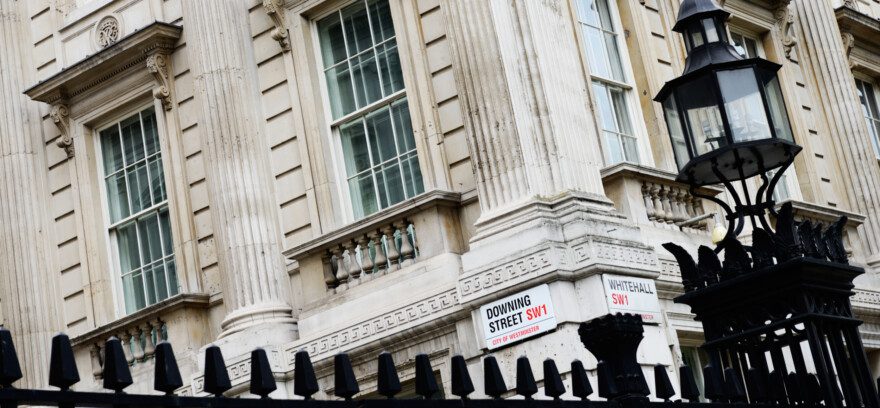
UK markets reached record highs this week, with the FTSE 100 Index rising 1.22% to trade at 9,705 points at the time of writing. Sir Keir Starmer has refused to stand by Labour’s manifesto pledge to not raise income tax, employee national insurance or value added tax, as he acknowledged the backdrop to next month’s Budget was tougher than expected.
The UK Prime Minister cited gloomy official forecasts on UK productivity growth, which analysts have estimated could cause a £20 billion hit to the public finances. Starmer blamed the downgraded productivity forecasts by the Office for Budget Responsibility on the austerity and Brexit policies of the previous Conservative government, along with Liz Truss’s disastrous “mini” Budget. Breaking the manifesto commitment not to raise the rates of income tax, employee NICs or VAT would be a major breach of faith with voters and would almost certainly be one of the principal lines of attack against Labour in future elections.
Labour officials maintain Chancellor Rachel Reeves has not yet decided to raise income tax rates in her November 26th Budget. Reeves is expected to announce an extension of the existing freeze on income tax thresholds and allowances, which would raise almost £10 billion. An increase in the basic rate of income tax by 1p would raise more than £8 billion a year in 2028-29, according to HM Revenue and Customs. A 1p increase to the higher rate of tax would lift revenue by £2.1 billion, while a 1p boost to the additional 45p rate would add £230 million.
Elsewhere, UK net mortgage approvals hit their highest levels of the year so far, despite fears over the potential for reform of property taxes in next month’s Budget. The Bank of England said net mortgage approvals for house purchases rose by 1,000 to 65,900 in September, above analysts’ expectations for net approvals of 64,500. Net borrowing of mortgage debt rose by £1.2 billion to £5.5 billion, the highest since March, when homebuyers were rushing to complete transactions before the expiry of a tax break.
UK house prices rose in October, according to lender Nationwide, outpacing forecasts by economists and adding to signs of demand in the housing market. Nationwide said its house price index increased by a monthly 0.3%, after rising by 0.5% in September. House prices were 2.4% higher than a year earlier, speeding up from an annual increase of 2.2% in September.
Commodity markets
In the commodity markets, Brent crude futures traded around $64 per barrel on Friday and are set for a weekly fall, as investors assessed a potential truce in a trade spat between the United States and China. President Donald Trump agreed to reduce tariffs on China to 47% from 57% after a meeting with President Xi Jinping in South Korea, in a one-year deal in exchange for Beijing resuming US soybean purchases, keeping rare earths exports flowing and cracking down on the illicit trade of fentanyl.
Despite being a positive development, investors appear to view the announced agreement between China and the US as more of a de-escalation of tension than a structural change in relationship.
Oil prices continue to be pressured by rising global output ahead of an OPEC+ meeting scheduled for November 2nd, where the alliance will likely announce another 137,000 barrels per day supply hike for December.
Gold prices traded around $4,010 an ounce on Friday and are set for a second weekly loss, pressured by fading expectations of future Federal Reserve interest rate cuts and a US-China trade deal.
Equity markets
US equity futures were mixed on Friday after upbeat quarterly results from major technology companies. In Thursday’s regular trading session, the Dow Jones Industrial Average lost 0.23%, the S&P 500 fell 0.99%, whilst the Nasdaq Composite declined 1.57%. The market was dragged lower on Thursday due to growing concerns over ballooning AI infrastructure spending.
The Federal Reserve cut US interest rates by 0.25% on Wednesday but warned a further reduction this year was not a “foregone conclusion” as a government shutdown clouds the outlook. Concerns about weak job growth coupled with signs of funding tightness in money markets prompted the Federal Reserve’s move to halt efforts to shrink its balance sheet, starting in December. However, Wednesday’s decision to lower the benchmark rate to a range of 3.75% to 4% drew some dissent on the 12-member Federal Open Market Committee, casting further doubt on the central bank’s strategy at its next meeting in December.
Markets have bet heavily on the prospect of another 0.25% cut this year, pricing in an 87% chance of another move in December ahead of Powell’s remarks. The odds of a cut fell 74% after his comments. The meeting came almost one month into a federal government shutdown, which has left the central bank without some economic data it relies on to make its decisions. The decision to cut the benchmark rate to between 3.75% and 4%, which was widely expected, leaves it at its lowest levels since late 2022 and follows months of pressure from President Trump to slash borrowing costs. The Federal Open Market Committee said the downside risks to employment have risen in recent months.
Amazon, UPS, Target, General Motors and other US companies have announced thousands of job cuts in recent days, with some directly citing plans to use artificial intelligence to reduce their labour force.
The information provided in this communication is not advice or a personal recommendation, and you should not make any investment decisions on the basis of it. If you are unsure of whether an investment is right for you, please seek advice. If you choose to invest, your capital may be at risk and the value of an investment may fall as well as rise in value, so you could get back less than you originally invested.