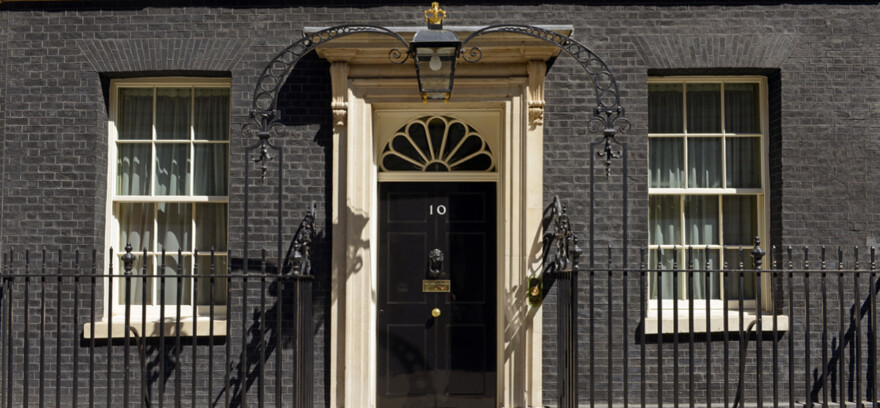
UK markets rebounded this week, with the FTSE 100 Index rising by 0.64% to trade at 10,450 points at the time of writing. Andy Burnham is preparing to enter Downing Street within weeks following the emotional resignation of Sir Keir Starmer as UK prime minister on Monday. Burnham is gearing up for “access talks” with civil servants to brief them on his plan for government, after Starmer outlined a timetable for a handover of power that could enable the outgoing Greater Manchester mayor to occupy Number 10 by July 17th. He would be Britain’s seventh prime minister in a decade. Addressing the nation from outside Number 10 on Monday morning, Starmer announced an end to his six years as Labour leader and two years as prime minister. It became almost certain that Starmer would be succeeded by Burnham, after his main rival, Wes Streeting, said he would not compete to become Labour leader. Streeting, the former health secretary, is now seen by some Labour MPs as the frontrunner to become chancellor in a Burnham government, although both sides insisted that no deal had been struck. Burnham was sworn in as an MP at Westminster on Monday afternoon after his emphatic victory in the Makerfield by-election last week. He was given a triumphalist welcome by Labour MPs in parliament. Burnham has sought to reassure voters that they will not face big tax rises if he becomes prime minister.
However, as the tax burden in the UK rises to record highs, economists have warned that the new Makerfield MP will find it hard to avoid hitting middle earners if he needs to raise substantial amounts of revenue. Unions are already urging Burnham to tax wealth, including by equalising rates on capital gains and income, as well as increasing tax on banks. The UK’s tax burden is set to rise from 34.5% of GDP in 2024-25 to a postwar record of 38.5% of GDP in 2030-31, according to the Office for Budget Responsibility. The biggest driver is the freezing of tax thresholds, extended by Chancellor Rachel Reeves in November’s budget.
Elsewhere, HM Revenue & Customs released the details of Britain’s new ISA regime on Tuesday, under which it will tax interest on cash held in stocks and shares ISAs at 22% from next April, as part of the government’s move to cap cash ISAs and encourage more savers to invest. The rules will include the flat-rate charge applied to any interest paid on cash held within non-cash ISAs, HMRC said in a factsheet. The tax authority also said non-cash ISAs cannot be fully invested in “cash-like assets” such as money market funds, although it noted that they will be permitted so long as they account for less than 100% of an investor’s portfolio. HMRC confirmed that transfers from non-cash Isas into the cash product will not be permitted, though it will be possible to transfer money from cash Isas into investment accounts.
Commodity markets
In the commodity markets, Brent crude futures traded around $72 per barrel on Friday, falling to pre-war levels this week as more tankers exited the strategically vital Strait of Hormuz, easing supply concerns despite a vessel coming under attack in the Gulf of Oman. The move lower comes as investors closely monitor developments in the Middle East while assessing whether recent diplomatic efforts would reduce the risk of supply chain disruptions.
A US official said that Iran was behind an attack on a cargo ship near the coast of Oman in the Strait of Hormuz. The ship was sailing under a Singapore flag, according to the Wall Street Journal. The United Kingdom maritime Trade Operations said the ship reported no casualties and no environmental damage.
Meanwhile, tensions in the Middle East remained elevated, with Iran and the US disagreeing over the use of funds covered under a memorandum of understanding between the two countries. The speaker of Iran’s parliament rejected claims by the Trump administration that the Islamic Republic’s unfrozen assets will be used to buy US agricultural products. However, US officials maintained that any released funds would remain subject to American approval.
Meanwhile, OPEC faces the possibility of another exit by its second largest producer, after the United Arab Emirates left the cartel in May. Iraq has reportedly sought a higher production quota from the cartel and told the group it could leave if demands are not met.
Gold prices traded around $4,050 an ounce on Friday and are set for a weekly fall, pressured by ramped-up expectations of higher interest rates this year after the US Federal Reserve struck a hawkish tone at its policy meeting last week. Despite being an inflation hedge, higher interest rates dampen bullion’s appeal as investors turn to yield-bearing assets.
Equity markets
US equity futures fell on Friday as renewed weakness in megacap technology stocks offset optimism from a bullish outlook for memory chip makers.
In Thursday’s regular trading session, the Dow Jones Industrial Average rose 0.14%, the S&P 500 fell 0.01%, whilst the Nasdaq Composite lost 0.46%. The US personal consumption expenditures price index surged to 4.1% in the 12 months through May, the largest increase and the first reading above 4.0% since April 2023, but in line with forecasts by economists in a Reuters poll.
Core PCE inflation, the Federal Reserve’s preferred gauge of longer-term inflation pressures, also edged up to 3.4%, well above the central bank’s 2% target. Markets now see an 80% chance of a rate hike in December, compared with 85% before the release of the PCE inflation data, and 61% chance before the Federal Reserve’s policy statement last week, the CME FedWatch data showed.
Manufacturing jobs in the US are falling at their fastest rate since the beginning of the Covid-19 pandemic, amid lingering concerns over the impact of the Iran war on American industry. According to S&P Global’s US Flash Purchasing Managers’ Index, which surveys senior executives at manufacturing companies, employment in the sector is estimated to have fallen in June at the fastest monthly rate since May 2020, when large swaths of US industry were grinding to a halt due to pandemic-era lockdowns. President Donald Trump pledged to unleash a “golden age” for US manufacturing, proclaiming investment announcements totalling almost $1 trillion since his inauguration in 2025.
However, beyond booming sectors relating to a nationwide AI data centre build-out and surging investment in defence, as well as sectors such as steel, which have benefited from Trump’s aggressive tariffs, many manufacturers wrestle with rising input costs and frequent changes in government policy.
US factory employment has fallen by 77,000 jobs since the president’s second term began, according to official data, while private spending on manufacturing construction fell in April to $15.2 billion, down about 16% since January 2025.
The information provided in this communication is not advice or a personal recommendation, and you should not make any investment decisions on the basis of it. If you are unsure of whether an investment is right for you, please seek advice. If you choose to invest, your capital may be at risk and the value of an investment may fall as well as rise in value, so you could get back less than you originally invested.